Hone Your Mission and Vision to Meet Your Long-term Business Goals
Businesses must adapt quickly according to employee and customer expectations as the workplace continuously evolves. Embracing a purpose-driven approach has become essential to success as more potential individuals tend to work for mission-driven enterprises.
Even customers look for brands they can trust in the long run. So, embracing a vision and purpose is vital to meet your long-term goal and becoming a successful entrepreneur.
Regardless of your business size, honing your mission and vision can lead you to a secure and successful future.
Let’s dig in to find out why it is essential to meet your long-term business goal by amplifying your mission and vision.

Importance of Honing Mission and Vision
As said above, the mission and vision play a crucial role in all aspects of the business, influencing the key ways. With a comprehensive and clear mission and vision, businesses can:
Create Identity
Mission and vision define a company’s basic identity and provide a framework for all decision-making. They help a firm build its brand and promote cooperation among all those who support or work for it.
Guide Culture
The mission and vision of a company act as a road map for developing a positive corporate culture and working environment. A company’s values, customs, and beliefs form a unique cultural environment that only a purpose-driven approach can strengthen. It provides a way to communicate that culture to the employees. The principles of the business reflect its mission, vision, and corporate objectives.
Develop Purpose
A clear mission and vision boost employee engagement and give them a sense of purpose. Clearly articulating how their efforts contribute to a greater objective, mission, and vision enables employees to understand the purpose and significance of their employment.
It results in increased morale and better long-term employee involvement in the workplace culture by assisting employees in seeing the positive aspects of their everyday tasks.
Attract Potential Talent
Many job seekers base their decision to apply for a position on the company’s mission and vision. A compelling mission and vision that resonate with the people inspire brilliant individuals to join the organization.
A thoroughly-developed purpose-driven approach enables like-minded individuals with the same objectives to collaborate organically, work together, and achieve collective success.

Translating Mission and Vision into a Structured Plan
According to the Harvard Business Review Leader’s Book, developing an exciting, united vision of the longer-term future for your organization or unit is one of the most crucial aspects of your work as a leader. This is challenging enough. Even when a vision is established, many leaders still need to implement it over the years.
For instance, a 2018 McKinsey study discovered that only 16% of businesses engaged in a multi-year digital transformation strategy demonstrated durable performance improvement.
What holds back most leaders is their failure to turn their vision into a well-structured strategy that they can maintain and retain focus on over time. A large-scale transformation across numerous departments requires a solid vision and action plan.
Leaders are adept at setting objectives, developing quantifiable KPIs, utilizing dashboards, and holding team members accountable in the short term.
However, when change initiatives take years, tracking frequently becomes difficult. It fades away in the face of quickly shifting economic and business situations that necessitate ongoing adaptation to generate day-to-day results.
So, how can you implement your vision and mission over time while dealing with unanticipated pressure and distractions to produce results?
Typically, a few approaches have helped many entrepreneurs face the challenges and execute a multi-year vision, either in combination or singly.
- Plan-Based Vision and Mission
Incorporate structured yearly planning that connects short-term goals with the long-term vision.
- Focused Experimentation
Encourage initiatives that lead to a successful vision.
- Training/Educating Employees
Create educational programs and training that will eventually bring the vision to life.
Let’s study these approaches more closely.
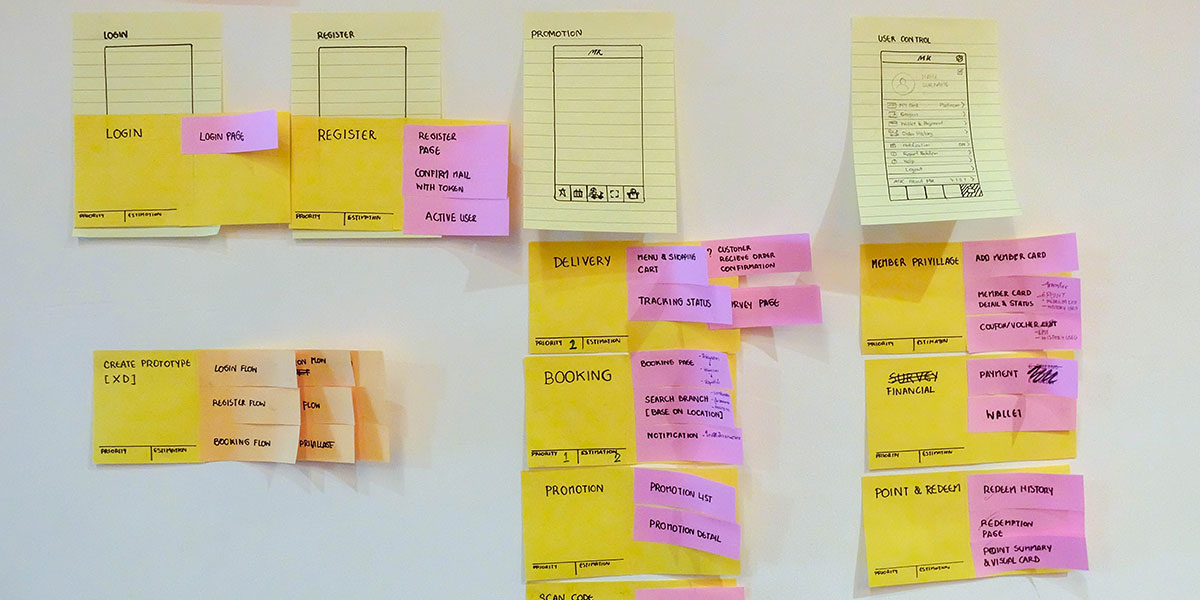
Vision and Mission-Based Planning Process
Most businesses use an annual planning process to establish corporate goals and budgets, which are then translated into objectives and goals for each business department, unit, and so on. This approach frequently begins with financial considerations, such as:
- What figures are necessary to convince investors?
- How can teams improve their performance this year compared to last year’s?
However, this strategy promotes short-term thinking. While the strategy may cite the strategy during the process, the longer-term vision does not direct individual behavior or resource allocation.
Instead, you can begin the planning process with a long-term vision and mission. This is one way your team can identify long-term possibilities and shape the yearly plans accordingly to meet the objectives.
Focused Experimentation
Keep in mind that not everyone can lead vision realization from the top down as a founder or CEO. Other-level leaders can also work purposefully toward a long-term objective, especially if they focus on experimentation already taking place within the organization to iterate toward that vision and mission.
Visions rarely materialize in a straight line, and leaders sometimes need to learn what it takes to turn them into reality. This is when the role of experimentation comes into play. Leaders or entrepreneurs can use experimentation as a tool to discover what works and what doesn’t on the journey of mission and vision.
However, without a targeted strategy, this experiment might not achieve the end objective you aim for.
Training and Education
The third strategy is to invest in a learning process that gives organization members a thorough knowledge of the vision and how it changes how they do their work.
Dr. Mieko Nishimizu’s work (former vice president at the World Bank) serves as an illustration of this strategy. The World Bank primarily approached economic development and poverty reduction via a top-down approach of professional policy adjustment, technical analysis, and lending when Nishimizu started working in the late 1990s.
According to her, organizations like the World Bank should act more as catalysts, partners, and resource providers to enable local people and societies to take control of their own economic destinies.
This vision necessitated a significant change in the Bank’s operations and how its employees interacted with locals. For years, the staff of the World Bank used to visit countries to inform the government about the expected actions.
Now they learn how to approach and listen to people who have experienced poverty as well as government officials and then work side by side with them to devise answers and solutions.
What’s More?

How to become More Purpose-Driven to Meet Long-term Goals
Here are some more tips to become more purpose-driven in business endeavors.
Find Out “Why”
“What compels me to get out of bed every morning? This is a common question many people ask themselves.
The response needs to be uplifting and motivational. It should clearly state your motivations. The finest and most successful leaders can inspire you to delve deeper into this “why.”It is one of the questions that prompts introspection and lets you check your motivations for living with purpose.
Of course, starting a firm is difficult, and having a clear understanding of the bigger picture will help lay a strong foundation. It’s easy to lose sight of your “why” and just carry on, but you must ingrain your vision and mission in everything you do for the business.
Take a Stance Whenever It’s Possible
It takes consistent action on your mission and vision to become a truly purpose-driven business. Some people think that taking a stand, particularly one that is political or social, would alienate some audiences in today’s opinionated world.
However, if that stance is in line with your “why” and is true to your ethos, it is worthwhile to take action. We say this because employees and customers can now quickly tell when a company is just talking and when it is trying to meet its demands.
Be Genuine
Authenticity has recently emerged as the benchmark for how companies should conduct themselves both publicly and privately. Being genuine and honest to oneself is what it means to be authentic. It aids in establishing dependability and credibility and can guide wise business choices, and help you hone your mission and vision to meet a long-term goal.
Be Purposeful in Efforts
Being a purpose-driven business that knows how to hone its vision and mission is not just a one-time occurrence. Ideally, it should reflect in everything your business does. Taking the initiative to implement a vision and mission increases the credibility of your business.
During significant cultural and societal events, it can be simple to make decisions with a purpose, but it’s necessary to take purposeful actions at all times. You should view every choice or plan of action through this purpose-driven lens, regardless of how minor it may seem.
Summing Up
Honing your mission and vision is essential to accomplish your long-term objectives. Businesses that align their decisions with their vision and mission have a better understanding of their goals. It helps businesses focus on what they want to become. Thus, the tips can guide you on how to hone your mission and vision.